Free QRNG
The public stream uses conditioned physical randomness with the normal sampler path. It is free, shared, and enough for experiments and playful integrations.
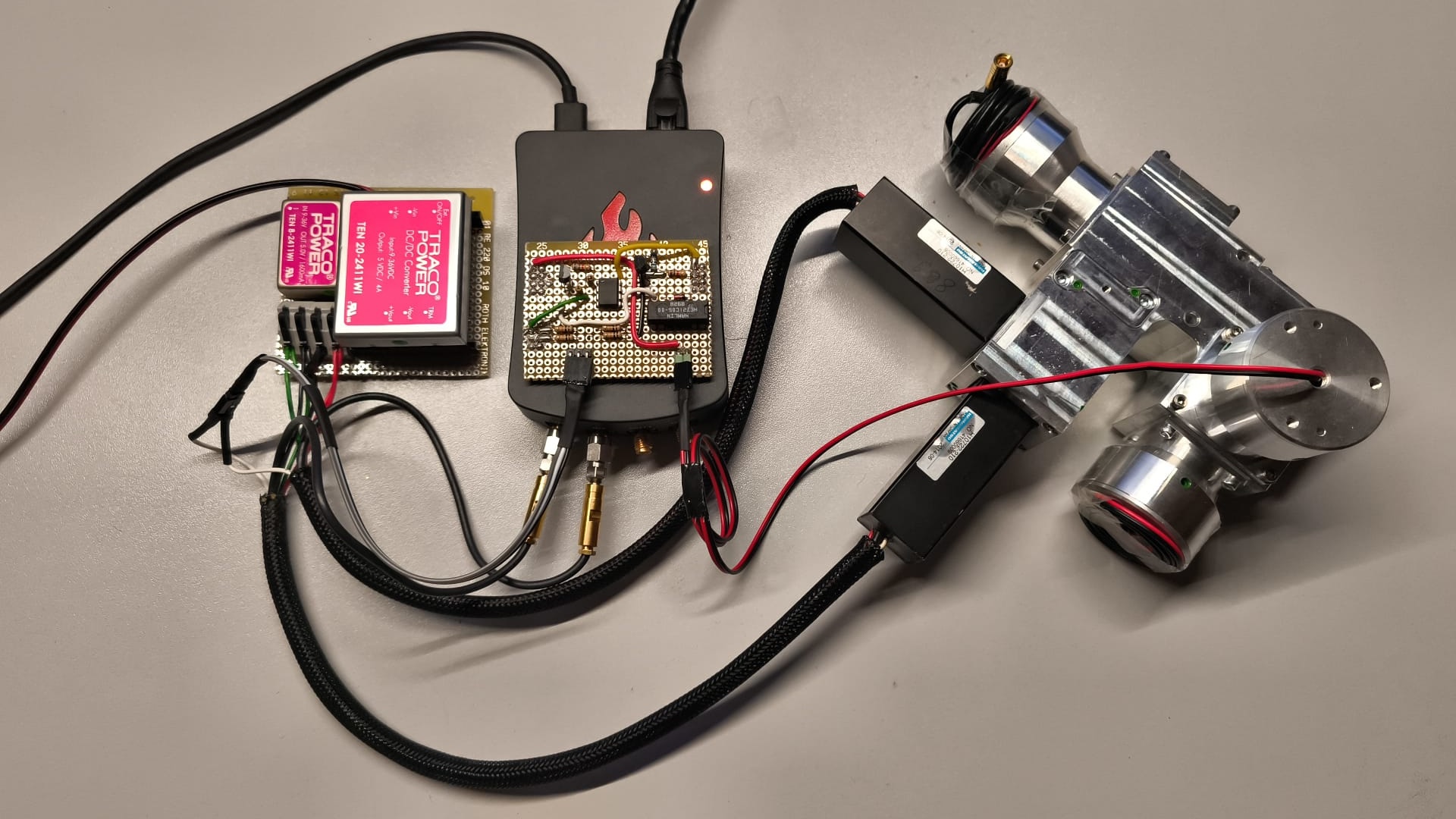
A live physical quantum randomness stream for LLM sampling, built from a beam splitter, two photomultiplier tubes, a Red Pitaya FPGA, and a stubbornly literal reading of Many-Worlds.
A Quantum Lever is a chain where a microscopic quantum alternative becomes a stable record, then gets amplified into a decision that can have ordinary macroscopic consequences.
quantum event -> measurement record -> amplification -> decision -> consequence
Most quantum differences vanish into heat, vibration, and inaccessible environmental detail. Here, the branch index is deliberately routed into software: first into random bits, then into a sampler, then into token choices.
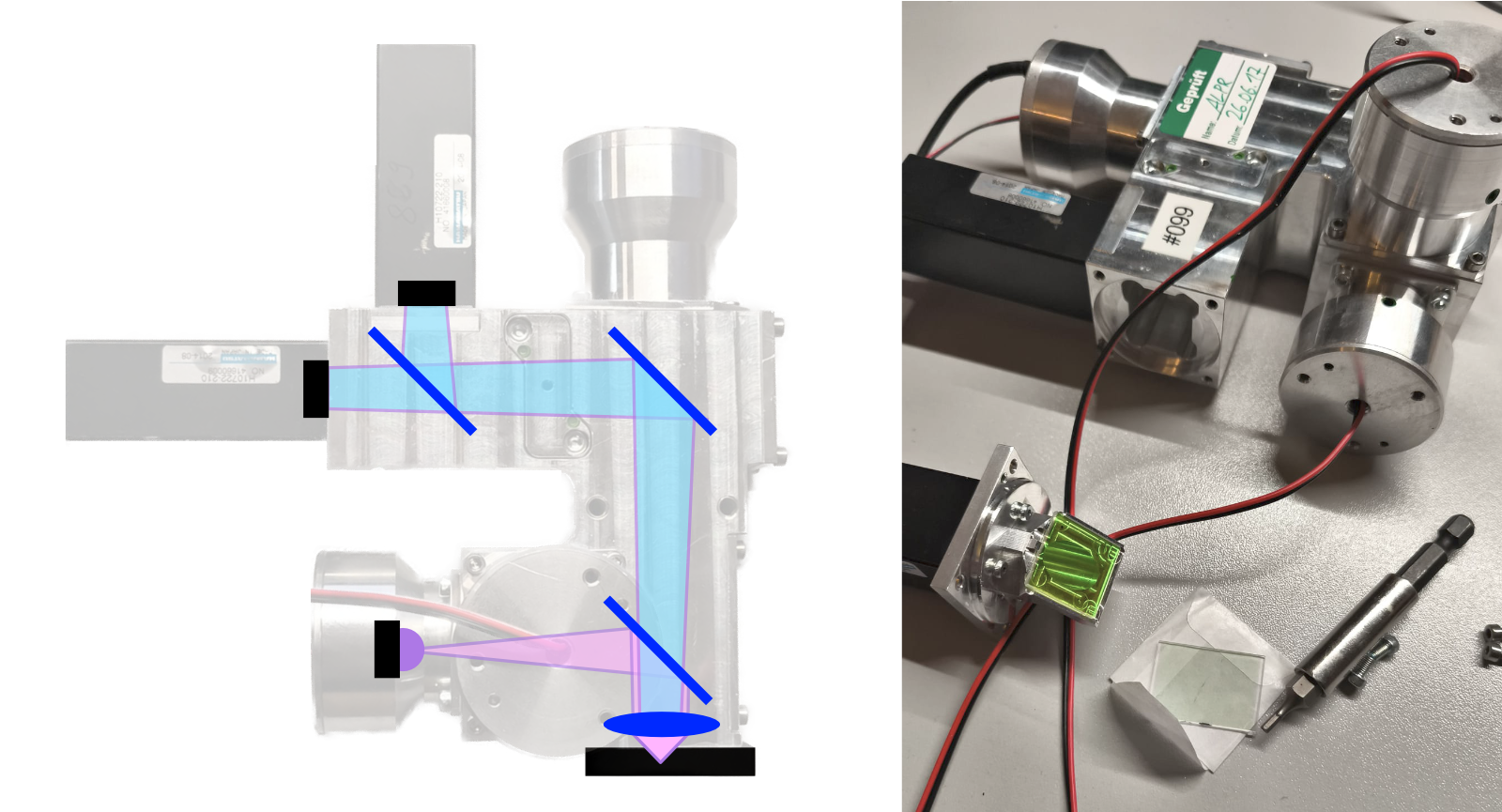
A weak light source feeds a 50:50 beam splitter. Two PMTs watch the output arms. If PMT A fires first, the FPGA records one path; if PMT B fires first, it records the other.
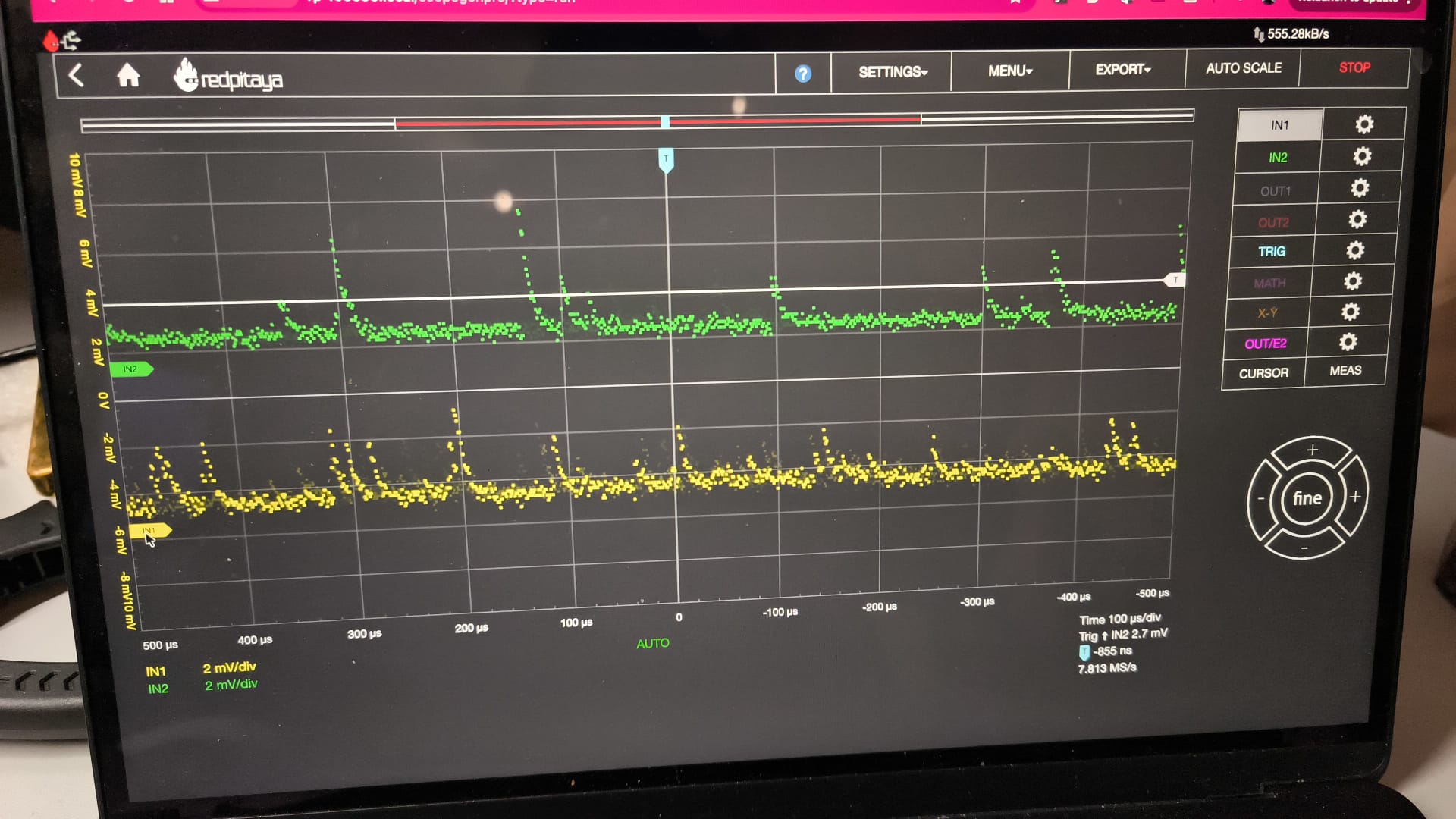
The FPGA rejects coincidences, applies a symmetric blanking window, and feeds the surviving which-path events into the public QRNG path used by the sampler API.
An LLM sampler maps random bits into token choices. With ordinary pseudorandomness, a fixed seed follows one deterministic path. With fresh QRNG bits, new physical quantum measurements enter the sampling loop as it runs.
Under Many-Worlds, every finite QRNG bitstring with nonzero amplitude is realized in some branch. A deterministic sampler maps those bitstrings to token choices. So every token sequence reachable by the implemented sampler is physically realized in some branch.
The model matters because it concentrates probability mass on coherent continuations. Quantum randomness supplies the branching input; the model is the lens.
The public stream uses conditioned physical randomness with the normal sampler path. It is free, shared, and enough for experiments and playful integrations.
Anonymous keys last 24 hours. Email-verified keys last one week. Both are free; the key system is there to reduce abuse while the community grows.
Signed source batches expose payload hashes and a running BLAKE3 chain hash, so public samples can be anchored to the live stream history.